Compassionate Senior Moving Services in Framingham, MA
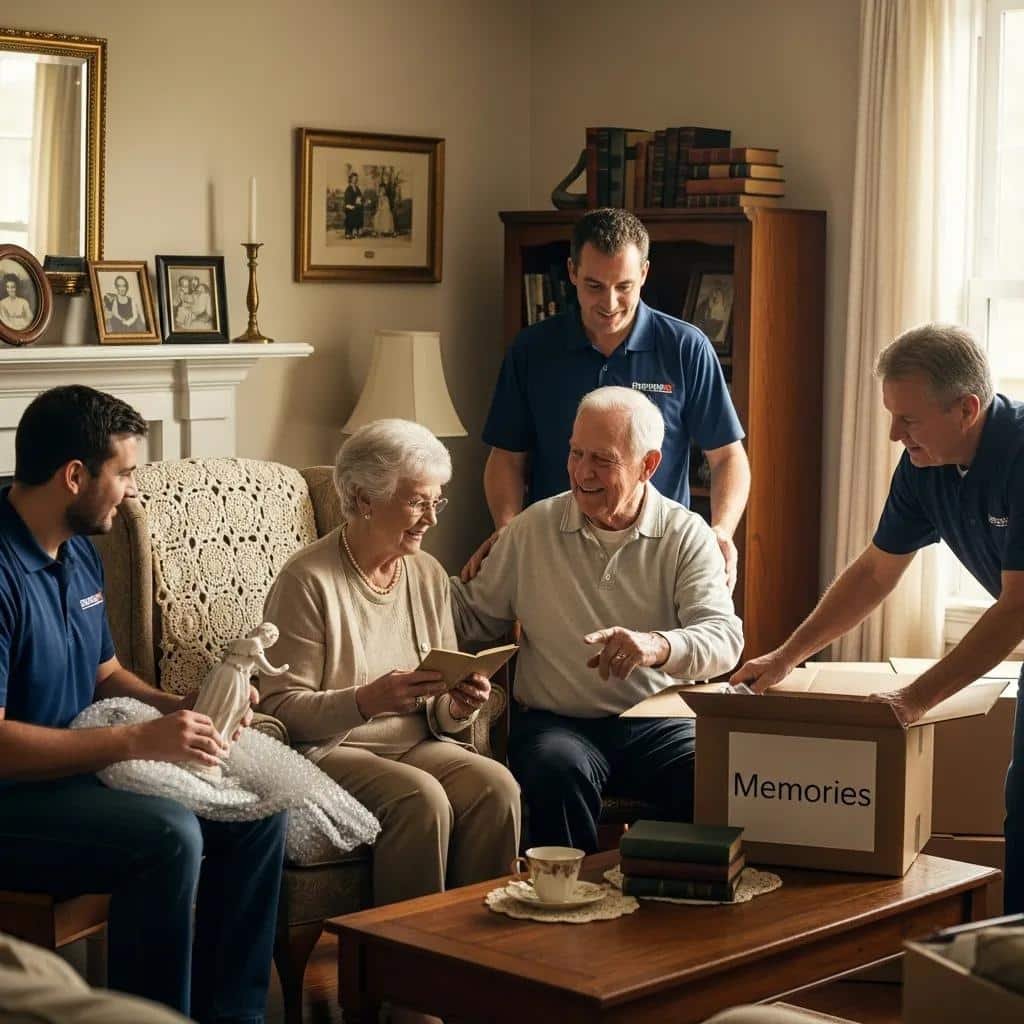
Compassionate Senior Moving Services in Framingham, MA: Expert Assistance for Stress-Free Elderly Relocation
Compassionate senior moving services in Framingham, MA, focus on making residential transitions dignified, safe, and emotionally manageable for older adults and their families. This article explains what those services include, why specialized senior movers and senior move coordinators are essential, and how tailored approaches to downsizing, packing, coordination, and new-home setup reduce stress for everyone involved. Many families face decision fatigue, mobility limitations, and sentimental complexity when a parent or relative moves; compassionate senior moving combines practical relocation assistance with emotional support to address those needs. Readers will learn clear definitions of service types, step-by-step downsizing strategies, what full-service move management covers, packing and unpacking techniques tailored to seniors, the advantages of local senior moving experts in Framingham, and answers to common questions about costs and differences from standard relocation services. Throughout the article, terms like senior movers Framingham, elderly relocation assistance, and downsizing for seniors are used to help you find practical, local pathways toward a calm, organized move. The next section defines compassionate senior moving and lists the core services that make these moves both efficient and humane.
What Are Compassionate Senior Moving Services in Framingham, MA?
Compassionate senior moving services are specialized relocation offerings that combine logistical moving tasks with emotional support and sensitivity to age-related needs, resulting in safer, calmer transitions. These services work by integrating trained personnel who pace work to an elder’s comfort, use protocols for medical and mobility considerations, and coordinate with family and receiving care teams to preserve dignity. The primary benefit is reduced physical risk and emotional distress, which leads to smoother move days and better long-term adjustment to a new living situation. Below is a concise list of core services commonly included so families can quickly see what a compassionate senior move typically covers and how it differs from a standard move.
- Downsizing and decluttering assistance to reduce household volume before the move.
- Packing and unpacking with gentle handling of fragile and sentimental items.
- Full move management, including timelines, vendor coordination, and on-site supervision.
- Emotional support, family consultation, and guided decision-making.
These components work together to create a practical plan and provide emotional scaffolding during transitions. Understanding how movers combine emotional and physical support clarifies why specialized senior moving is more effective than generic relocation services, and the following subsection describes how these supports are provided during a move.
How Do Senior Movers Provide Emotional and Physical Support?

Senior movers provide emotional support by listening, establishing clear expectations, and pacing work to match the senior’s energy and comfort levels, which helps preserve autonomy and reduce anxiety.
Teams trained in elder-sensitive communication use memory-friendly techniques such as photographing items, creating simple inventories, and using memory boxes to honor sentimental objects while facilitating practical decisions.
Physical support includes safe lifting practices, the use of mobility aids, and arranging furniture and pathways to minimize fall risk during loading and unloading, which protects both seniors and movers.
These emotional and physical supports work together: emotional pacing reduces rushed movements that can cause accidents, and safety protocols reduce stress by assuring families that care and skill underlie each action, which naturally leads to why moving services for seniors are specialized rather than generic.
What Makes Moving Services Specialized for Seniors?
Specialized senior moving services are distinguished by staff training in elder care sensitivity, protocols for cognitive and mobility limitations, and partnerships with healthcare or senior living staff to coordinate medical needs or facility requirements. Teams often use customized timelines, minimize repetitive decision pressure, and employ specialized equipment such as ramp systems and protective padding for mobility devices to adapt the physical process. These differentiators reduce risk of injury, honor sentimental concerns, and ensure continuity of care by coordinating medication access and documentation handoffs with receiving communities. Recognizing these adaptations explains how downsizing services specifically simplify relocation for seniors, which is the next topic explored in detail.
Stress-Free Senior Moves with Compassion in Framingham
Downsizing for seniors is a process that reduces household volume while preserving meaningful possessions and simplifying future living; it works by assessing priorities, sorting items, and applying clear next-step actions like keep, donate, sell, or store. This structured approach lowers moving costs, reduces physical labor, and decreases decision fatigue, producing a more manageable move and a safer, better-arranged new home. Practical benefits include fewer boxes, clearer floor plans for accessibility, and a curated selection of possessions that supports wellbeing in smaller spaces. The step-by-step downsizing process below outlines how an organized plan moves from assessment to action and targets key decisions families face during elderly relocation assistance.
- Assess goals and space constraints: match what stays to the new home’s layout and senior’s routines.
- Sort items room-by-room using quick keep/donate/sell/store decisions to avoid overwhelm.
- Document sentimental items with photos or memory boxes before deciding on long-term storage or display.
- Arrange donation, sale, or storage logistics and schedule removal to coincide with the move.
Following this sequence keeps momentum steady and reduces back-and-forth decisions that create stress. Practical strategies and specific handling of sentimental items then help families make compassionate choices that honor memories while simplifying possessions.
Before reviewing specific handling strategies, the following table compares typical downsizing options and the expected outcomes to help families choose the most appropriate path for each category of belongings.
This comparison helps families weigh emotional value against practical outcomes and prepares them for decisions on move day. Effective strategies for decluttering, then build on these options with actionable techniques and local resources.
What Are Effective Strategies for Senior Downsizing and Decluttering?

Effective downsizing strategies focus on small, consistent steps, clear decision criteria, and tools that reduce emotional overload, so progress remains steady and respectful. Practical techniques include working room-by-room, setting daily time limits, photographing items before release, and creating a “maybe” box to revisit after an initial pass; these tactics preserve decision-making capacity without forcing immediate final choices. Using labels, simple inventories, and memory boxes helps preserve provenance and reduces regret, while local donation centers and estate sale coordinators handle removal logistics. These practical methods make each session feel achievable and allow families to schedule professional pickups or sales as the move date approaches, which also ties into how sentimental items can be handled with special care.
How Is Handling Sentimental Items Managed with Care?
Handling sentimental items involves combining emotional protocols—such as memory interviews and family mediation—with concrete preservation steps, such as photo documentation and the creation of keepsake boxes for display or storage. Professionals recommend photographing heirlooms, creating provenance notes, and offering digitization of albums or documents to retain memories without physical volume. When items require appraisal or specialist handling, move managers coordinate referrals to appraisers or specialty movers to protect provenance and value. These practices reduce dispute risk, preserve the emotional narrative, and create a practical plan for items that will move with the senior or be archived. They naturally transition into what full-service move management entails for an entire relocation.
What Does Full-Service Senior Move Management in Framingham Include?
Full-service senior move management is a comprehensive offering that covers assessment, a written moving plan, vendor coordination, packing and transport oversight, on-site supervision, and post-move organization to ensure a complete, stress-reduced transition. The mechanism is a project-management approach tailored to the seniors’ needs: a move manager creates timelines, assigns tasks, books specialty vendors, and remains the primary contact for family and receiving facilities. The value is a single accountable resource that reduces complexity for families while guaranteeing follow-through on logistics and compassionate practices. Below is a concise list of typical move-management components that clarify what clients can expect from a full-service approach.
- Initial assessment and goal-setting with the senior and family.
- Development of a written plan, schedule, and inventory.
- Coordination with movers, estate-sale services, donation pickups, and storage providers.
- On-site supervision during packing, loading, delivery, and unpacking.
These coordinated steps create predictability and minimize surprises on move day. The table that follows breaks down core move-management tasks, who typically handles each, estimated time frames, and the primary benefits for the senior and family.
This breakdown clarifies responsibilities and timelines so families can make informed choices. Personalized moving plans are then developed within this framework to address mobility, medical needs, and individual preferences.
How Are Personalized Moving Plans Developed for Seniors?
Personalized moving plans begin with an intake conversation that captures the senior’s daily routines, health considerations, mobility limitations, and emotional priorities; this intake guides goal-setting and timelines. The move manager then produces a written plan with milestones, an itemized inventory, vendor contact lists, and a clear point of contact for family members, ensuring accountability and transparency. Adjustments are built into the plan to accommodate medical appointments or fluctuating energy levels, and the deliverables help everyone know what to expect on specific days. Creating this tailored plan reduces ambiguity and supports coordination with receiving communities, which is the focus of the following subsection.
What Coordination Happens with Senior Living Communities?
Coordination with senior living communities includes advanced communication to confirm move-in dates, room measurements, delivery access, elevator scheduling, and any facility-specific acceptance protocols to ensure a smooth arrival. Move managers handle documentation transfers, verify possessions against facility requirements, and confirm where items should be placed within the apartment or room to support mobility and safety. On move day, the manager liaises with facility staff to supervise delivery and ensure compliance with the community’s procedures, preventing delays and miscommunication. These coordination steps both protect the senior’s well-being and facilitate a confident handoff to site staff. They lead directly into how packing and unpacking services tailor to elderly relocation assistance.
How Do Packing and Unpacking Services Cater to Elderly Relocation Assistance?
Packing and unpacking services for seniors prioritize gentle handling, clear labeling, an essentials-first strategy, and a new-home setup focused on accessibility and immediate comfort. The mechanism relies on a priority-box system that keeps medications, important documents, and day-one essentials separate and accessible. At the same time, fragile and sentimental items receive specialized wrapping and detailed inventories. The result is a new home that is safe and functional on arrival, reducing the stress of living among a sea of boxes for days. The checklist below shows immediate priorities and tools used during packing to support seniors’ safety and continuity.
- Essentials box with medications, important documents, chargers, and toiletries.
- Fragile-item packing with padding, double-boxing if needed, and clear fragile labels.
- Labeling system that notes room placement and orientation for quick setup.
- Inventory sheet and photographs for high-value or sentimental items.
Using this checklist improves first-night comfort and speeds the adjustment process. Gentle packing techniques for fragile items are an essential specialized skill.
What Are Gentle Packing Techniques for Fragile and Specialty Items?
Gentle packing techniques combine appropriate materials, careful handling, and precise documentation to protect antiques, glassware, and heirlooms during a move. Recommended materials include acid-free tissue for textiles, bubble wrap and box liners for ceramics, and rigid crates for oversized or valuable furniture; each item is labeled and inventoried, with handling notes to guide movers and recipients. Movers may use padded blankets, corner protectors, and custom crating for high-value pieces and keep a photographic record to document condition pre-move. Knowing when to involve specialty appraisers or carriers mitigates risk. It informs insurance discussions, and these unpacking practices segue into how new-home setup is facilitated to ensure safety and familiarity.
How is the New Home Setup and Organization Facilitated?
New-home setup focuses on immediate comfort and accessibility by placing beds, bathroom items, and a first-night essentials box before arranging other belongings, which preserves basic routines from day one. Move teams often create an accessible pathway plan, position frequently used items within easy reach, and install temporary aids if needed to improve safety while final adjustments are made. Labeling cabinets and drawers and providing a simple orientation walkthrough with the senior reduces confusion and supports independence in the new space. These setup priorities create a livable environment quickly and demonstrate why local senior moving expertise matters in a community context.
Why Choose Local Senior Moving Experts in Framingham, MA?
Local senior moving experts in Framingham bring hyper-local knowledge, established relationships with area senior living communities, and a faster in-person response that improves move planning and execution.
This local expertise means move managers understand specific facility protocols, local donation and storage options, and neighborhood logistics such as parking and elevator access, which streamlines scheduling and reduces last-minute surprises.
Trust and accountability are easier to build with in-person assessments and recommended local partners, resulting in smoother coordination with community resources and healthcare providers.
The following subsection outlines the types of local resources that commonly support senior moves in Framingham and how to engage them.
What Local Resources Support Senior Moving in Framingham?
Framingham offers a network of local resources—including senior centers like the Callahan Senior Center, donation outlets, estate-sale coordinators, and storage facilities—that assist with different aspects of moving and transition planning. These organizations can accept household donations, advise on accessibility modifications, or provide community-based support and referrals to health services that ease relocation stress. Move managers typically compile a short resource list tailored to each senior’s needs so families know available options for removal, appraisal, or temporary storage. Leveraging these local resources reduces logistical friction and enhances community support during relocation, which also connects to how testimonials can showcase compassionate experiences without revealing private details.
How Do Testimonials Reflect Compassionate Moving Experiences?
Testimonials for senior moving services typically highlight themes such as patience, dignity, clear communication, and attention to fragile or sentimental items, providing prospective clients with relatable scenarios of compassionate care. An effective testimonial structure includes a brief quote about the emotional relief experienced, a short description of the logistical outcome, and a note on how staff preserved dignity or handled sensitive items—this format helps families evaluate cultural fit and competence. Presenting testimonials as short case summaries (anonymized) emphasizes outcomes like reduced stress and quicker settling-in periods without disclosing private information. These trust-building narratives reinforce why families often prefer local senior moving specialists for elderly relocation assistance.
What Are Common Questions About Senior Moving Services in Framingham?
Common questions about senior moving services concern costs, timelines, insurance and safety, and how senior-focused moves differ from standard relocation services; clear answers help families plan realistically. Cost is driven by service scope, volume, distance, and specialty handling, while timelines vary based on downsizing needs and facility scheduling, so transparent estimates are essential for decision-making. Safety protocols and insurance options protect people and possessions, and differences from standard moves center on training, pacing, and care coordination. The table below compares cost factors and typical explanations to give families an immediate sense of how quotes are formed.
Understanding these drivers helps families request transparent, comparable estimates and prepares them to ask the right questions. The following subsection expands on how costs are determined and how to obtain precise estimates.
How Are Senior Moving Costs Determined and Explained?
Senior moving costs are determined by primary drivers such as the volume of belongings, the services required (packing, unpacking, move management), the travel distance, and specialized handling for fragile or medically necessary items. To obtain transparent estimates, request itemized quotes, ask about hourly vs. flat-rate options, and verify which services—like estate-sale coordination or storage—are included and which are quoted separately. Comparing written estimates using the same service definitions reduces surprises and clarifies which tasks are performed by the move team versus external vendors. Clear cost explanations reduce anxiety, set expectations, and support informed choices, which also underscores the differences between senior moves and standard relocations.
What Makes Senior Moving Different from Standard Relocation Services?
Senior moving differs from standard relocation because it combines specialized training in elder sensitivity, intentionally slower pacing to accommodate energy and decision-making, and coordination with healthcare providers or senior living facilities that standard movers typically do not offer. These moves emphasize preserving dignity, caring for sentimental items, and reducing cognitive load for older adults through memory-preserving practices, such as photographing belongings and creating memory boxes. Safety protocols, documented inventories, and a designated move coordinator ensure continuity and reduce family coordination burdens. Recognizing these distinctions helps families select services tailored to elderly relocation assistance rather than generic moving options.